Be He a Doer of His Works and a Continuer of His Deeds
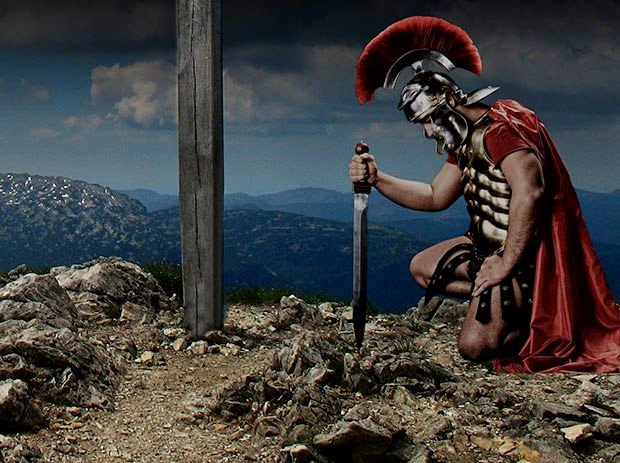
If you were to make a list of big topics discussed by Jesus and the New Testament writers, the subject of deeds or works would have to be on that list. They all spoke about it, and no one more than Jesus.
Jesus rebuked the Pharisees for not doing the works of Abraham (John 8:39-40), and said we would be judged for what we have done (John 5:28-29).
This frightens some people. They think we have to get busy for the Lord and that he will judge us on our performance. "Am I doing enough? Will I make the grade?"
Others are confused. "I thought Jesus wanted to give me rest (Matt. 11:28). Why did he say "No one who puts his hand to the plow and looks back is fit for service in the kingdom of God (Luke 9:62)? What does he want from me – rest or hard work?
All confusion and dead works would end if we only understood the Biblical meaning of work, which is this:
Do not work for food that spoils, but for food that endures to eternal life, which the Son of Man will give you… The work of God is this: to believe in the one he has sent. (John 6:27, 29)
Everything we do is meant to be grounded on what Christ has done for us. What is a good work? It's anything that blooms from the seed of Christ's work.
In the modern church we see hundreds of types of work, but not all of them are good. Some are dead works that reflect unbelief in the finished work of the cross. "I have to save and sanctify myself. I have to prove my salvation through hard work." These works wear us out and do not result in praise to the Father (see Matt. 5:16).
What about the Revelation letters?
In five of his letters to the Revelation churches, Jesus famously said, "I know your deeds." But there was one letter where the subject received particular attention.
In his letter to Thyatira, Jesus commended the saints for their deeds before briefly discussing the deeds of Jezebel the false prophet and seducer. Her deeds (meaning dead works and sin), will reap destructive consequences, he said. In contrast, their deeds (meaning the faith works of the saints), will be rewarded. Finally, at the close of his letter, Jesus encouraged the saints to keep his deeds to the end.
He who overcomes, and he who keeps my deeds until the end, to him I will give authority over the nations. (Revelation 2:26)
As we have seen elsewhere, an overcomer is someone who believes in Jesus. It is someone who sees themselves as God sees them – dearly loved and empowered with Christ-bought authority.
What does it mean to keep his deeds?
To keep his deeds is to trust Jesus and keep trusting in his work rather than your own. Keeping his deeds is analogous to keeping his word and holding fast to his name (Rev. 2:13, 25, 3:11). It's the Revelation equivalent of continuing in the grace of God (Acts 13:43) or continuing in the faith (Col. 1:23).
The meaning is the same in each case: To continue in the grace of God is to continue in Jesus. It is refusing to be suckered into sin or seduced into self-trust. It is being grounded and settled in Christ and remaining unmoved from the hope of the gospel.
What if I don't keep his deeds to the end?
Start striving in the flesh like a Galatian and you'll lose your liberty. Fall from grace like an Ephesian and you'll lose sight of your Father's love. Fool around with sin like a Thyatiran and you could suffer the self-inflicted consequences of sin. But you won't lose your salvation. There are bad consequences to straying, but you will never cause your Father to unchild you.
But here's the thing, you won't be tempted to do any of those things if you keep his deeds.
Do you see? We don't need a six week series on the difference between good deeds and bad deeds, for the message is simple: Keep your eyes fixed on Jesus and you won't be seduced by the siren song of Self. Honor his finished work and you will not fall for the counterfeit lure of lesser works.
Three kinds of deeds
In his letter to Thyatira, Jesus mentions his deeds (the finished work of the cross), your deeds (the works of the saints), and her deeds (Jezebel's wicked ways). Three kinds of deeds. If our deeds are disconnected from his deeds, then her deeds may tempt us. But if our deeds are keeping his deeds, then her deeds will never distract us.
"But Paul, what should I do?"
Well that's not really the subject of this article – we're talking about his deeds, not ours, and one should follow the other. But since this question weighed heavily on me when I was a young man, I will share what I have learned.
First, find out who you are in God's eyes. What does your heavenly Father think of you? What dreams has he placed within you? What has he written into your members?
Then having established what your Father thinks of you and having made your home in his limitless love, do what comes naturally. What we do always follows who we are. Let God define the latter, and you will figure out the former.
Image source
___________
Enjoy this article? Sign up to our free email list and we'll notify you about new articles as soon they come out. No spam, we promise.
Escape to Reality exists thanks to the support of our awesome readers:
Source: https://escapetoreality.org/2019/01/31/what-does-it-mean-to-keep-his-deeds/
0 Response to "Be He a Doer of His Works and a Continuer of His Deeds"
Post a Comment